Next Day Delivery order before 2pm
 Order / Enquire Now
 Call 020 8916 2222
1. What are Class A Fixed Height Metal Pedestals?
Class A Fixed Height Metal Pedestals are ultra-low-profile aluminium supports designed for suspended paving and decking installations where both restricted build-up height and non-combustible construction are important.
They lift the finished paving or decking away from the structural surface, creating space beneath for drainage while avoiding the additional height required by a conventional adjustable pedestal.
The pedestals are manufactured from high-grade 6063 T6 aluminium and are available with compatible headpieces for both paving and decking applications.
Full specifications are available in the Class A Fixed Height Pedestal technical datasheet.
2. What types of projects are Class A Fixed Height Pedestals suitable for?
The pedestals are designed for low-height suspended paving and decking installations on projects including:
- Balconies
- Terraces
- Flat roofs
- Podium decks
- Walkways
- High-rise developments
- Residential schemes
- Commercial developments
- Refurbishment projects
- Areas with restricted door thresholds
They are particularly useful where a non-combustible support is required but there is insufficient space for a taller adjustable pedestal system.
The supporting structure must still be capable of carrying the complete paving or decking build-up and all anticipated loads.
3. What heights are available?
Class A Fixed Height Pedestals are available in three heights:
- 10mm
- 15mm
- 20mm
Each pedestal measures approximately 93mm wide x 60mm long.
The choice of height allows the support to be matched closely to the available build-up space, making the range particularly useful around low thresholds and on refurbishment projects where finished floor levels are already fixed.
Where greater height adjustment is required, the MetalPad EX adjustable pedestal range provides a compatible Class A solution.
4. What fire classification do the Fixed Height Pedestals achieve?
The aluminium Fixed Height Pedestals have a published Class A1 classification to BS EN 13501-1:2018.
This makes them suitable for incorporation into projects where non-combustible supporting components are required.
It is important to consider the complete construction, however. The paving, decking, headpieces, rails, fixings and other materials used with the pedestal must also meet the requirements of the individual project fire strategy.
Current statutory guidance for England is available through Approved Document B on GOV.UK.
5. Why are the pedestals made from aluminium?
The pedestals are manufactured from 6063 T6 extruded aluminium to BS EN 755-9.
Aluminium provides a strong, lightweight and corrosion-resistant support while also achieving the non-combustible performance required from the Class A1 pedestal.
The material does not rot or warp and is well suited to long-term use beneath external paving and decking.
Its relatively low weight also makes the individual supports easy to handle during installation, which can be particularly useful on balconies, rooftops and projects with restricted access.
6. Can the same Fixed Height Pedestal be used for paving and decking?
Yes. The aluminium pedestal has been deliberately designed as a versatile base support that can accept different headpieces according to the finished surface.
For paving, it can be used with either:
- A drop-in Crucifix spacer
- A Class A paving headpiece
For decking, a dedicated rail headpiece can be fitted to support compatible aluminium joists or rails.
This allows the same pedestal family to be used across different areas of a project while the headpiece performs the function required by the selected surface finish.
The full accessory range can be explored through Wallbarn’s Class A headpieces and fixings section.
7. How are paving slabs supported on the pedestals?
There are two principal paving arrangements.
The simplest option is a drop-in Crucifix, which positions neighbouring slabs while also maintaining an open drainage joint between them.
Alternatively, a purpose-designed Class A paving headpiece can be fitted to the pedestal. The lugged headpiece keeps tiles or slabs correctly positioned and is manufactured from galvanised steel with a Zintec 200 protective coating.
The paving headpiece adds approximately 3mm to the overall system height, which should be included when calculating the finished build-up.
8. Can the Fixed Height Pedestals support an aluminium decking substructure?
Yes. A dedicated rail headpiece allows the pedestal to support an aluminium joist or rail above it.
The headpiece can accommodate Wallbarn aluminium joists or another suitable box rail or joist with a maximum width of 60mm.
The rail headpiece itself adds approximately 3mm to the overall system height.
For a coordinated non-combustible build-up, the pedestals can be combined with Wallbarn’s Class A Rail Substructure System.
9. How much weight can a Class A Fixed Height Pedestal support?
The published technical information gives each Class A Fixed Height Pedestal a recommended maximum weight tolerance of 10,000kg.
Independent proof-load testing by Specialist Technical Services (UK) Ltd was also carried out on the 10mm Fixed Height Pad. During that laboratory test, the pedestal reached 209.24kN, approximately 21,392kg, before failure.
The independent failure result should not be treated as the normal permitted project load. The complete installation must also account for the paving or decking strength, pedestal spacing, supporting structure, imposed loading and appropriate design factors.
The original evidence can be reviewed in the independent STS proof-load test certificate.
10. Can the pedestals be installed over waterproofing or insulation?
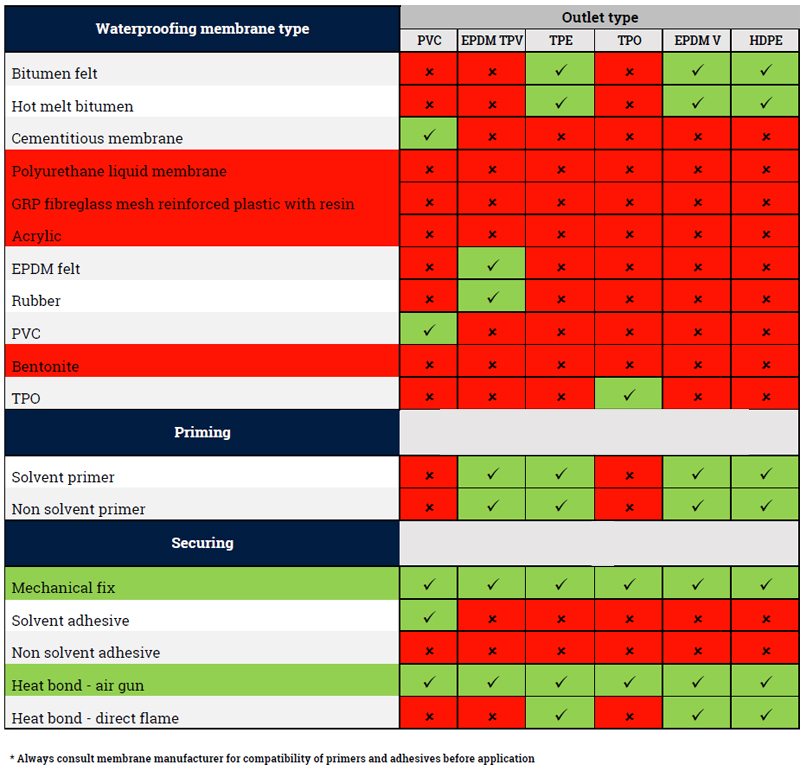
Yes, provided the underlying roof construction is suitable for the proposed loading and is properly protected.
The standard pedestal footprint measures approximately 93mm x 60mm, which is suitable for firm structural surfaces such as concrete.
Where the pedestal is positioned over more vulnerable materials such as insulation or waterproofing, a Class A Spreader Plate can be added.
The Spreader Plate increases the support area to 185mm diameter, distributing the load across a much wider section of the surface beneath and helping reduce concentrated point loading.
The waterproofing or insulation manufacturer should confirm the suitability of the complete build-up.
11. Does the Spreader Plate need to be mechanically fixed to the pedestal?
No. The Class A Fixed Height Pedestal is designed to slide directly into the compatible Spreader Plate without requiring a mechanical fixing between the two components.
This keeps installation simple while substantially increasing the contact area beneath the support.
The Spreader Plate is manufactured from galvanised steel with a Zintec 200 coating and is also designed for Class A applications.
This is particularly useful on projects where maintaining a low overall build-up is important but the insulation or waterproofing beneath requires better load distribution.
12. How do the pedestals help improve drainage?
The Fixed Height Pedestals lift the paving or decking above the underlying structural surface, creating a drainage cavity beneath the finished floor.
For paving, the Crucifix or paving headpiece maintains open joints between adjacent slabs so rainwater can pass through.
With decking, water passes through the designed gaps between boards.
Rainwater can then travel across the waterproofed deck towards the appropriate outlets rather than remaining trapped directly beneath the surface finish.
The underlying deck should retain its designed fall, and drainage outlets must be kept clear.
13. How is the correct pedestal spacing determined?
There is no single spacing suitable for every project.
The required centres will depend on factors including:
- Paving or decking type
- Slab dimensions and strength
- Rail or joist specification
- Anticipated loading
- Structural deck capacity
- Surface layout
- Location of perimeter details
The pedestal arrangement should therefore be calculated around the complete installation rather than the load capacity of the pedestal alone.
For larger or more complicated schemes, project drawings and loading information can be used to determine a suitable support layout.
14. Can the aluminium pedestals be cut or adapted on site?
The aluminium profiles can be cut where a project detail genuinely requires it, but suitable metal-cutting equipment and appropriate PPE must be used.
High-quality blades designed for aluminium are recommended to produce a controlled, accurate cut while minimising sparks and damage to the extrusion.
Particular care should be taken when cutting above waterproofing or insulation because metal swarf and sharp offcuts can damage vulnerable materials beneath.
Any modification must also preserve the correct fit with the selected headpiece and should not compromise the structural performance of the support.
Where possible, selecting the appropriate 10mm, 15mm or 20mm pedestal from the outset is preferable to unnecessary site modification.
15. What maintenance do Class A Fixed Height Pedestals require and how long are they designed to last?
The aluminium pedestals require very little direct maintenance once correctly installed.
The main ongoing requirement is to maintain effective drainage beneath the paving or decking. Drainage channels and outlets should be checked regularly and kept clear of leaves, dirt and other debris so standing water cannot accumulate around the supporting structure.
The published Operations & Maintenance Manual gives the pedestals a 15-year limited product performance warranty and an expected lifespan of up to 50 years, provided the products are correctly specified, installed, used and maintained.
Full maintenance and warranty information is available in the Class A Fixed Height Pedestal Operations & Maintenance Manual.