Next Day Delivery order before 2pm
 Order / Enquire Now
 Call 020 8916 2222
Balance Self-Levelling Pedestals – FAQs
- What are Balance self-levelling pedestals?
Balance Pedestals are height-adjustable supports with a specially designed self-levelling headpiece for suspended paving, tiling and decking systems.
Unlike a conventional fixed-head pedestal, the Balance head can automatically compensate for variations in the surface beneath it. This helps overcome minor deck irregularities, waterproofing overlaps and differences in paving thickness while creating a smooth, level finished surface above.
The combination of height adjustment and automatic slope correction makes Balance particularly useful where the underlying deck is not completely level.
Detailed dimensions and performance information can be found in the Balance Pedestals technical datasheet.
- What types of projects are Balance Pedestals suitable for?
Balance Pedestals are designed for predominantly flat structural decks incorporating a minimal fall for drainage.
Typical applications include:
- Flat roofs
- Podium decks
- Balconies
- Terraces
- Walkways
- Raised paving areas
- Raised decking areas
- Residential developments
- Commercial developments
They are particularly useful on projects where drainage falls or small variations in the structural surface need to be accommodated without affecting the level of the finished paving or decking.
The structural deck must be secure, stable and capable of supporting the complete installed system. Further project and installation guidance is available in the Balance Pedestals Operations & Maintenance Manual.
- How does the self-levelling headpiece work?
The headpiece is designed to move independently so that it can compensate automatically for an underlying surface that is not perfectly level.
A specially engineered mechanism beneath the head allows the upper support surface to move smoothly in different directions until the paving slab or decking joist sits correctly.
This means the pedestal itself can follow the deck beneath while the headpiece helps create a flatter and more consistent finished surface above.
For installers, this reduces the amount of manual packing and levelling required and can make setting out a raised surface considerably quicker.
- How much slope can a Balance Pedestal compensate for?
The self-levelling headpiece can correct gradients of up to 5%, equivalent to approximately 2.86 degrees or a 1-in-20 fall, in all directions.
This has been specifically designed to accommodate the falls commonly incorporated into roofs and terraces to move rainwater towards drainage outlets while allowing the paving or decking surface above to remain level.
It can also help compensate for smaller localised variations such as waterproofing overlaps or differences in slab thickness.
Where the underlying gradient exceeds the published limit, the proposed build-up should be reviewed before installation.
- What types of paving can be installed on Balance Pedestals?
Balance Pedestals are suitable for suspended paving systems using appropriate slabs and tiles, including:
- Porcelain tiles
- Natural stone
- Concrete paving
- Other suitable external paving slabs
The paving units sit directly onto the self-levelling headpiece, with integrated positioning lugs keeping neighbouring slabs correctly aligned.
The suitability of the paving itself will depend on factors including its dimensions, thickness, strength, anticipated loading and the pedestal layout specified for the project.
Architects and specifiers can also access Balance Pedestal CAD and BIM information when developing project details.
- Can Balance Pedestals support timber and composite decking?
Yes. Balance Pedestals have been designed for both paving and decking applications.
The positioning lugs on the headpiece are located towards its outer edges, leaving a 55mm space that can accommodate a timber joist.
Once the joists have been positioned, the pedestal heights can be adjusted to create the required finished decking level without having to manufacture individual timber packers or furrings of different thicknesses.
Raising the timber or composite decking structure away from the roof surface also improves airflow and drainage beneath the deck, helping reduce prolonged moisture contact with the substructure.
- What height range do Balance Pedestals cover?
The current Balance range provides adjustable support heights from 25mm to 392mm.
Standard Balance Pedestals are available in:
- 25–50mm
- 47–62mm
- 62–82mm
- 77–112mm
- 107–142mm
Balance Extra Pedestals provide the larger ranges:
- 97–147mm
- 137–227mm
- 222–392mm
The overlapping height ranges make it possible to accommodate variations across a project while maintaining a consistent upper surface.
Individual pedestal dimensions can be checked in the Balance technical datasheet, while downloadable drawings are available through the Balance CAD/BIM library.
- How is the height of a Balance Pedestal adjusted?
Balance Pedestals use a telescopic threaded stem that can be turned by hand to achieve the required height.
This provides very precise adjustment without specialist tools, allowing installers to work progressively across the area and set each support to the correct finished level.
Where compatible Balance Pedestals require additional height because site conditions differ from the original design, a Pedestal Column Extender is also available for suitable configurations.
This flexibility can be particularly useful where actual site levels vary slightly from drawings or measurements taken earlier in the project.
- How do Balance Pedestals maintain consistent paving joints and drainage?
The standard Balance headpiece has four positioning lugs arranged around the outer area of the head.
These lugs maintain a consistent gap between neighbouring paving slabs, helping installers create straight and regular paving lines while leaving open joints for surface water to drain through.
The standard lug width is approximately 2mm and 4mm, options available by special order. Standard lug height is 10mm.
The suspended arrangement allows rainwater to pass between the slabs and continue across the drainage layer beneath rather than remaining on the finished paving surface.
- What is the purpose of the rubber shim on the Balance headpiece?
A grey rubber anti-shock shim is fitted to the Balance headpiece as part of the standard pedestal assembly.
Its ridged surface improves grip between the pedestal and the paving slab or joist while also helping reduce vibration and noise transmission into the structural deck beneath.
This is a deliberately integrated part of the Balance design and is particularly beneficial on balconies, terraces and rooftop areas where movement and impact noise through the finished surface may otherwise be more noticeable.
Where additional protection or acoustic isolation is required beneath the pedestal base, a separate Rubber Crumb Acoustic Pad is also available.
- How much weight can a Balance Pedestal support?
Balance Pedestals have a published working weight tolerance of 683kg per pedestal.
Technical testing records:
- 6,700N, approximately 683kg, at the end of linear behaviour
- A maximum load of 11,493N, approximately 1,171kg
These figures demonstrate the load-bearing capability of the individual pedestal, but the performance of a complete installation must also consider the strength and dimensions of the paving or decking, pedestal spacing, imposed loads and the capacity of the underlying structural deck.
The published test figures can be checked in the Balance Pedestals technical datasheet.
- Can Balance Pedestals be installed over a waterproofing membrane?
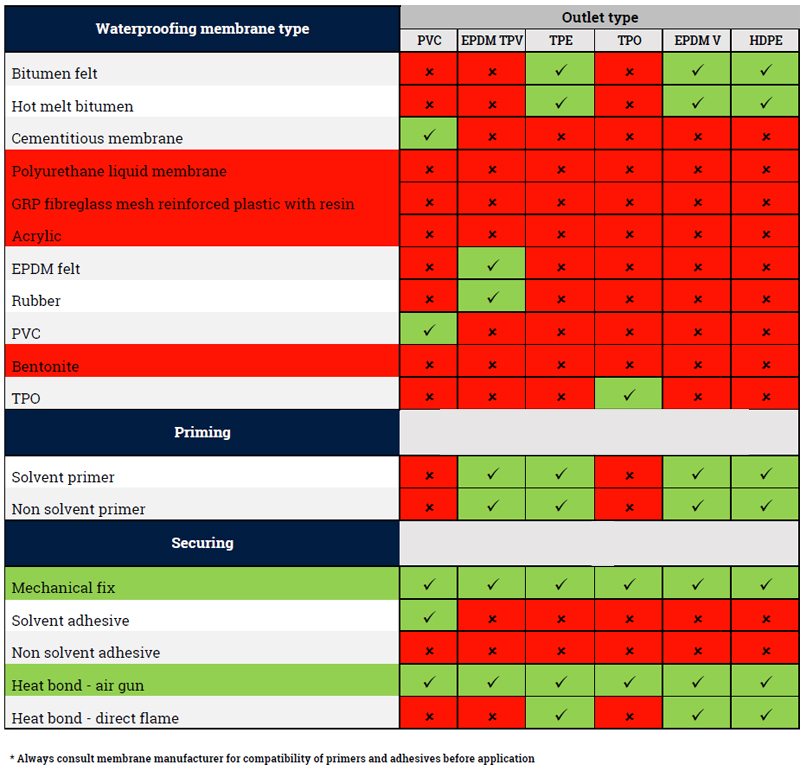
Yes. Balance Pedestals can be installed above suitable waterproofed roofs, podiums, balconies and terraces.
The waterproofing system must be adequately protected before the pedestals and finished paving or decking are installed. This is important to prevent concentrated point loading or puncturing of the membrane.
The standard pedestal has a 200mm diameter baseplate, helping distribute loading across the supporting surface. A 150mm baseplate is also available on request for suitable applications.
Additional protection can be introduced beneath the pedestal using products such as the Rubber Crumb Acoustic Pad, where appropriate for the project.
The complete roof build-up should always be compatible with the requirements of the waterproofing system.
- Do Balance Pedestals need to be mechanically fixed to the structural deck?
Balance Pedestals are normally installed as a loose-laid system without adhesive or mechanical fixings.
The weight of the paving or completed decking framework holds the system securely in position. Keeping the supports independent of the structural building can also help avoid creating unnecessary stress points or penetrations through the waterproofing layer.
If a particular project requires the pedestals to be secured, fixing holes are moulded into the baseplate so mechanical fixings can be introduced.
Any fixing arrangement must be appropriate for the structural deck and must not compromise the waterproofing system or its seals.
- How are paving slabs supported around walls and perimeter details?
Balance Pedestals can be combined with purpose-designed accessories to create neat and secure perimeter details.
The Metal Edging Plate is compatible with Balance Pedestals and is designed to support paving where slabs meet walls, upstands and parapets.
Its spring-loaded edge helps maintain separation between the paving and the adjoining wall while accommodating small movements and retaining a drainage gap. It also provides additional support beneath paving that extends beyond the centre of the pedestal at perimeter positions.
Other compatible items can be found within the pedestal accessories range, including levelling shims, acoustic pads and other products for specific installation details.
- What material are Balance Pedestals made from and what maintenance do they require?
Balance Pedestals are manufactured from virgin fibre injection-moulded polypropylene and are designed for long-term external use.
They can be used in temperatures from -40°C to +75°C and the material is resistant to sudden temperature changes, acids, alkalis, salts and normal atmospheric conditions.
The published fire classification is Euroclass E. Where a project specifically requires a Class A or non-combustible supporting system, an appropriate product should instead be selected from the Wallbarn fire-rated range.
Once correctly installed, the pedestals themselves require little direct maintenance. The joints between paving or decking should be kept clear, and the cavity beneath the finished surface should be inspected at least once per year to ensure drainage channels remain unobstructed and debris or combustible material does not accumulate.
The system also allows paving or decking to be removed where necessary, providing access to drainage outlets, waterproofing and concealed services without demolishing the complete surface.
A 15-year limited warranty applies subject to correct installation, intended use and the applicable warranty conditions. Full maintenance and warranty information is available in the Balance Pedestals Operations & Maintenance Manual.