I-Plus Gallery Popup
-
Paving
-
Decking
-
Graphics
-
Videos


no images were found
no images were found
 Next Day Delivery order before 2pm (on most items)
 Order / Enquire Now
 Call 020 8916 2222


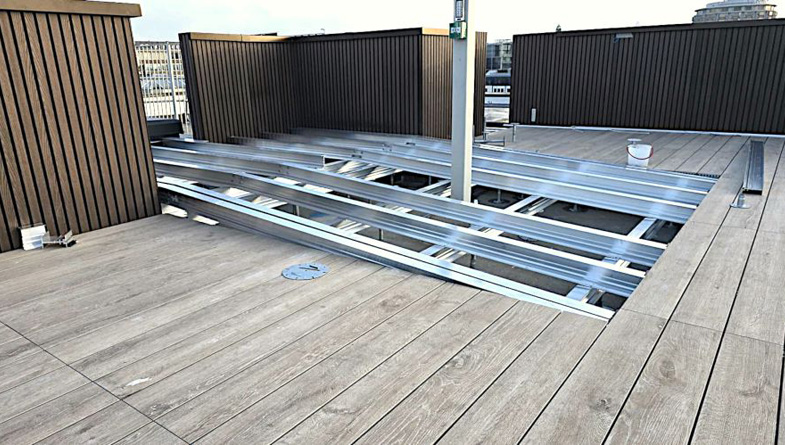
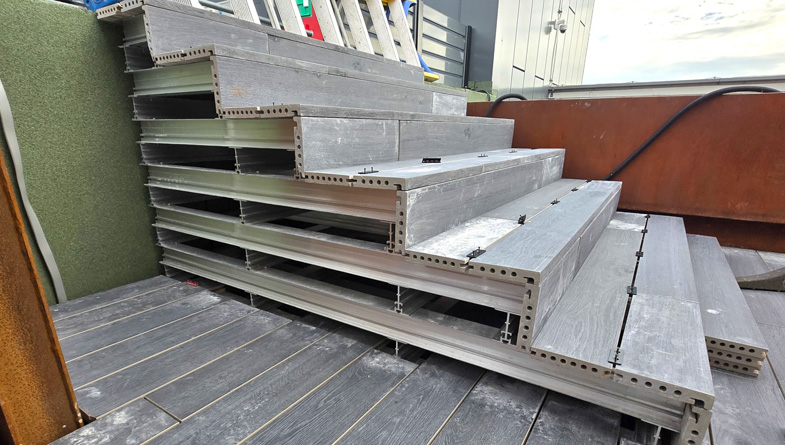

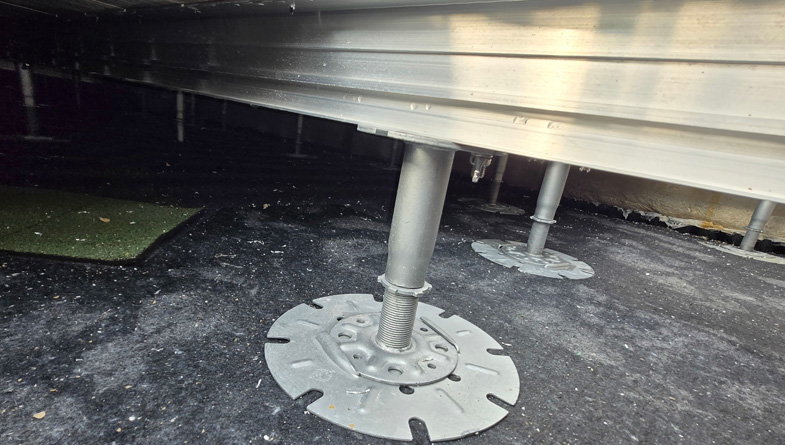


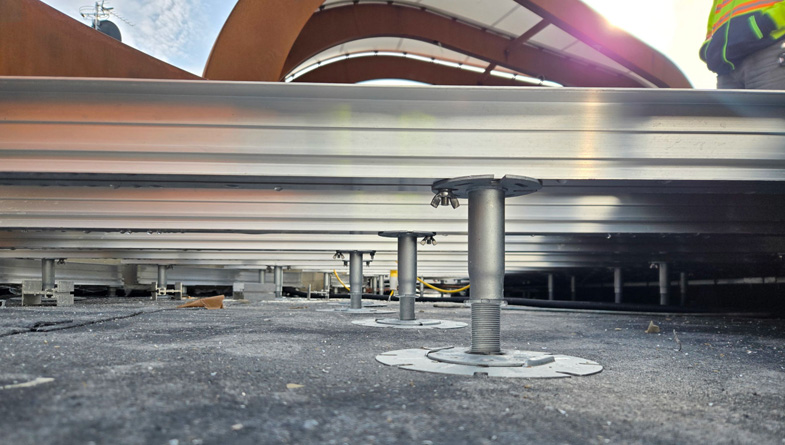
Wallbarn’s premium I-Plus Rails/Joists are made from high grade extruded aluminium. They are a product of Wallbarn’s innovative design and proudly manufactured in the United Kingdom. They are purpose-built for both paving and decking applications and an integral part of our Class A substructure systems. They are compatible with our plastic and fire-rated pedestals.
no images were found
no images were found
Error: Contact form not found.
| Rail height | Maximum distance between pedestals | Recommended maximum distance |
|---|---|---|
| 15mm | 600mm | 500mm |
| 20mm | 800mm | 625mm |
| 25mm | 1000mm | 625mm |
| 50mm | 600mm | 600mm |
| 75mm | 1200mm | 1200mm |
| 100mm | 2200mm | 1800mm |
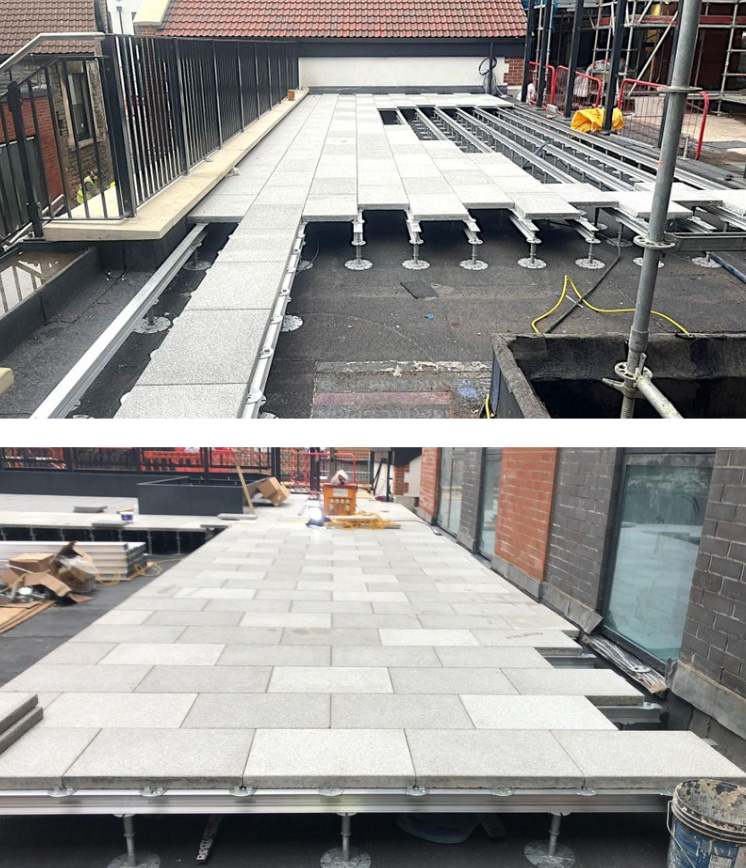
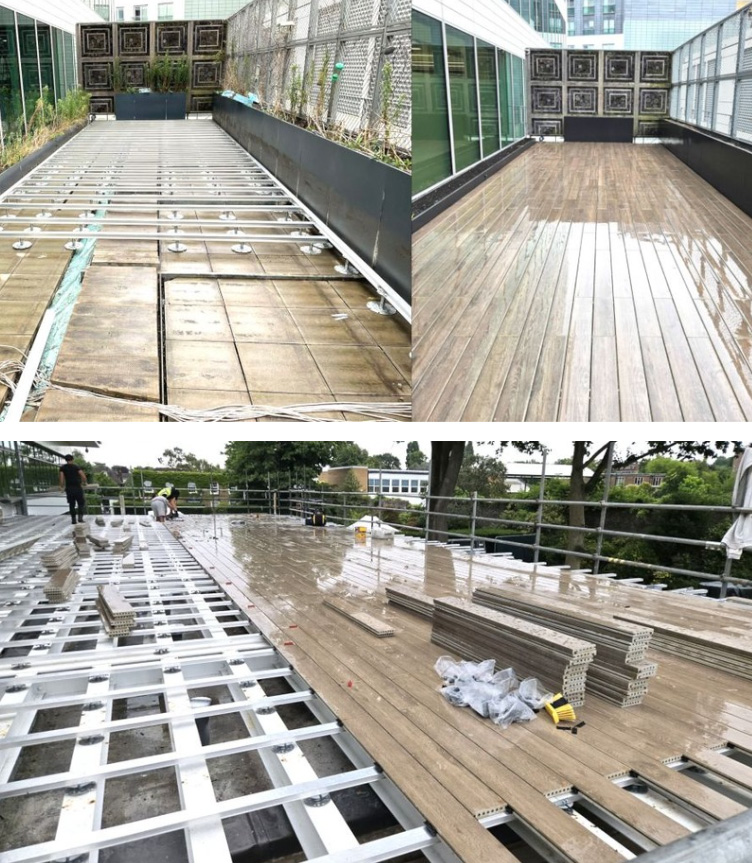

The M8 Wing Nut Kit offers manual securing. Here, the bolt head is inserted into the I-Plus beam’s side or bottom profile, and the wing nut is manually placed around the bracket. This approach’s strength lies in its initial loosely secured framework, enabling flexible realignment for precise positioning. Once the desired alignment is achieved, tightening the wing nuts solidifies the substructure. This method guarantees a robust and precisely aligned construction.
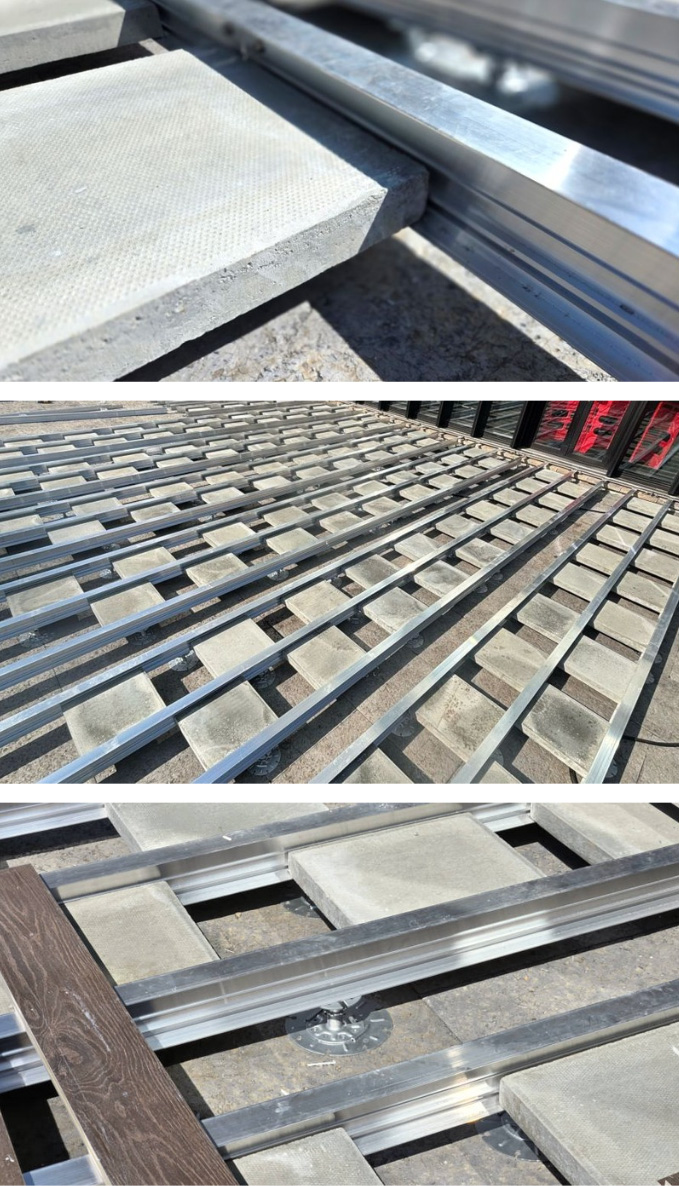
The I-Plus aluminium rail is perfectly suited for adding extra weight to a suspended decking or paving system and can be used as ballast on inverted roofing systems.
This means even inverted waterproofing systems can be sufficiently ballasted without having to penetrate the waterproofing system.
The I-Plus rail has been designed so that a concrete slab/flag can be placed onto the lower ledge of the rail. By placing the next rail into position and pushing tightly to the other side of the slab it locks into position on the lower edges of each I-Plus rail.
This method means even inverted waterproofing systems can be sufficiently ballasted & the decking or paving system does not need to be mechanically fixed to the sub-floor, avoiding the need to penetrate waterproofing layers.
Wind uplift is also an important issue for high rise installations. Although expert professional advice should always be sought beforehand, this method of adding concrete slabs as ballast can help address wind uplift issues. In particular, the non-combustible decking systems can be most suitable for these areas since the boards are mechanically fixed to the rails.
As none of the waterproofing system is penetrated using this ballasting method, there are no issues with manufacturer warranties. This mitigation approach can be particularly effective for high-rise projects and exposed locations.
no images were found
no images were found
The I-Plus Rail is a high-strength aluminium rail and joist designed to create raised substructures beneath paving and decking.
It is manufactured in the UK from 6063 T6 extruded aluminium and has been specifically developed to combine relatively low weight with the structural strength needed for longer spans and higher build-up applications.
The rail can form part of both standard and Class A substructure systems depending on the pedestals, headpieces and finished surface selected.
Full dimensions and technical performance information is available in the I-Plus Rail technical datasheet.
I-Plus Rails are suitable for raised paving and decking installations including roof terraces, balconies, podium decks, flat roofs, communal areas and commercial or residential external spaces.
They are particularly useful on projects requiring:
Their strength and adaptable connection system also make them well suited to complex refurbishment and retrofit projects.
I-Plus Rails are available in three profile heights:
All three profiles are 60mm wide and are supplied in 3,600mm lengths.
The published weights are approximately 1.61kg/m for the 50mm rail, 1.92kg/m for the 75mm rail and 2.19kg/m for the 100mm rail.
The different depths allow the rail to be selected according to the required build-up height, span and structural requirements of the project.
The main advantage of the I-Plus profile is its greater structural depth.
Deeper rails can achieve substantially larger spans between supporting pedestals, which can reduce the number of supports required and provide greater flexibility when working around drainage points, roof features or other obstructions.
The I-Plus range is therefore particularly suited to larger build-up heights and projects where additional structural capacity is required.
Where threshold height is extremely restricted, Wallbarn’s lower-profile Box Rails may provide a more appropriate solution.
Yes. The I-Plus Rail has been purpose-designed for both applications.
For paving, compatible paving headpieces can be positioned along the top of the rail to support porcelain tiles, stone or other suitable slabs.
For decking, the 60mm-wide upper surface provides a substantial platform onto which suitable decking boards and fixing systems can be securely installed.
This dual-purpose design makes I-Plus particularly useful on developments containing different surface finishes within the same terrace or podium area.
I-Plus Rails are compatible with both Wallbarn’s plastic and non-combustible pedestal ranges.
For standard systems, the rail can clip directly onto compatible Mega Balance self-levelling pedestals and MiniPad arrangements without requiring a mechanical fixing at the rail-to-pedestal connection.
For non-combustible installations, the rail is designed to connect mechanically to MetalPad EX fire-rated pedestals using the M8 Wing Nut Kit.
This allows the same aluminium rail profile to be incorporated into different substructure specifications.
Yes. The current Wallbarn product information identifies the aluminium rail system as suitable for Class A applications, with the current Operations & Maintenance Manual publishing a Class A1 classification to BS EN 13501-1:2018 for the aluminium rail/joist range.
For a complete non-combustible build-up, the I-Plus Rail should be combined with appropriate fire-rated components such as MetalPad EX pedestals, metal headpieces and suitable non-combustible paving or decking.
More information is available within the Class A Rail Substructure System.
The achievable span depends on the rail depth, loading and complete project design.
The deeper I-Plus profiles allow considerably larger support centres than low-profile rails. Wallbarn’s current published guidance includes support distances extending from approximately 600mm for the 50mm rail to 1,800mm for the 100mm rail under recommended configurations.
The rails have been independently tested for load and deflection, with testing based around a maximum 5mm deflection criterion.
Final pedestal spacing should always be selected according to the rail profile, imposed loads and complete surface build-up.
The independent results can be reviewed in the official STS proof-load test certificate.
Independent destructive testing demonstrates the considerable strength of the aluminium profiles.
Two-metre lengths were supported at each end and loaded centrally until significant deformation or failure occurred. Published results recorded:
These are laboratory test results rather than universal allowable project working loads.
The actual installation must also consider span, pedestal spacing, finished surface strength and all imposed loads.
Yes. Adding cross-members or noggins between parallel I-Plus Rails can significantly increase lateral stability and resistance to deflection.
Independent testing on the 75mm rail showed that adding noggins to a two-rail framework increased the measured load at 5mm deflection by approximately 41.75% in the tested configuration.
Noggins can therefore be particularly valuable on larger frameworks, where wider spans, greater loading or additional lateral rigidity are required.
They also help tie the individual rails together into a more unified structural frame.
I-Plus Rails can be joined using purpose-designed straight and right-angle brackets.
Two principal fixing approaches are available. Self-tapping screws can provide a direct mechanical connection, while an M8 bolt and wing nut arrangement allows the framework to be assembled loosely before final alignment.
The second method is particularly useful on larger projects because the rails can be adjusted into their precise position before the wing nuts are fully tightened.
This makes it easier to create accurate, square and consistent substructures.
Yes. Multiple I-Plus Rails can be positioned perpendicular to one another where a substantially deeper supporting structure is required.
A purpose-designed rail-to-rail connection allows one level of rails to support another, creating a strong multi-level framework.
This can be particularly useful on retrofit projects where an existing structural arrangement creates a large void beneath the required finished surface level.
It also provides additional design flexibility where different sections of a terrace have significantly different height requirements.
Yes. The profile has been deliberately designed so that ballast can be incorporated within the substructure.
Concrete slabs or flags can be positioned on the lower ledges of neighbouring I-Plus Rails and secured between them. This adds weight to the raised paving or decking system without requiring the ballast to sit on the finished surface.
This arrangement can be particularly useful on inverted roofs and exposed locations because additional restraint can be introduced without mechanically penetrating the waterproofing layer.
Wind uplift remains project-specific, so the required ballast and restraint strategy should always be determined by suitably qualified project professionals.
Yes, provided the underlying construction is suitable for the intended loads.
When installing above existing steel, a suitable rail headpiece can create a controlled interface between the aluminium rail and steel structure. Wallbarn also recommends an appropriate Class A separation tape where additional protection against interaction between the metals is required.
Where the system is supported above waterproofing or insulation, the underlying products must have sufficient compressive strength for the proposed pedestal spacing and loads. Vulnerable membranes should also be adequately protected against puncturing and point loading.
For suitable Class A pedestal installations, a spreader plate can be introduced to distribute loads across a larger area.
I-Plus Rails require relatively little direct maintenance once correctly installed.
The most important ongoing requirement is to ensure that the sub-deck drainage system continues to operate effectively. Drainage outlets and channels should be checked regularly and kept free from leaves, debris and other obstructions so that water cannot accumulate around the substructure.
The aluminium rails have a published 15-year limited product performance warranty and an expected lifespan of up to 50 years, subject to correct specification, installation, use and maintenance.
Full care, installation and warranty information is available in the Aluminium Box Rail & I-Plus Rail Operations & Maintenance Manual.