Next Day Delivery order before 2pm
  Order / Enquire Now
 Call 020 8916 2222
This page presents a structured version of the official guidance from the Green Roof Organisation, helping designers, architects, and contractors understand best practices for modular green roof systems.
For reference, the original document can be viewed here.
Introduction
This best practice design guidance has been developed by the GRO Technical Committee, specifically the Modular Green Roof Working Group. It brings together expertise from manufacturers, suppliers, and contractors to provide clear recommendations for modular green roof systems.
1. What Is a Modular Green Roof System?
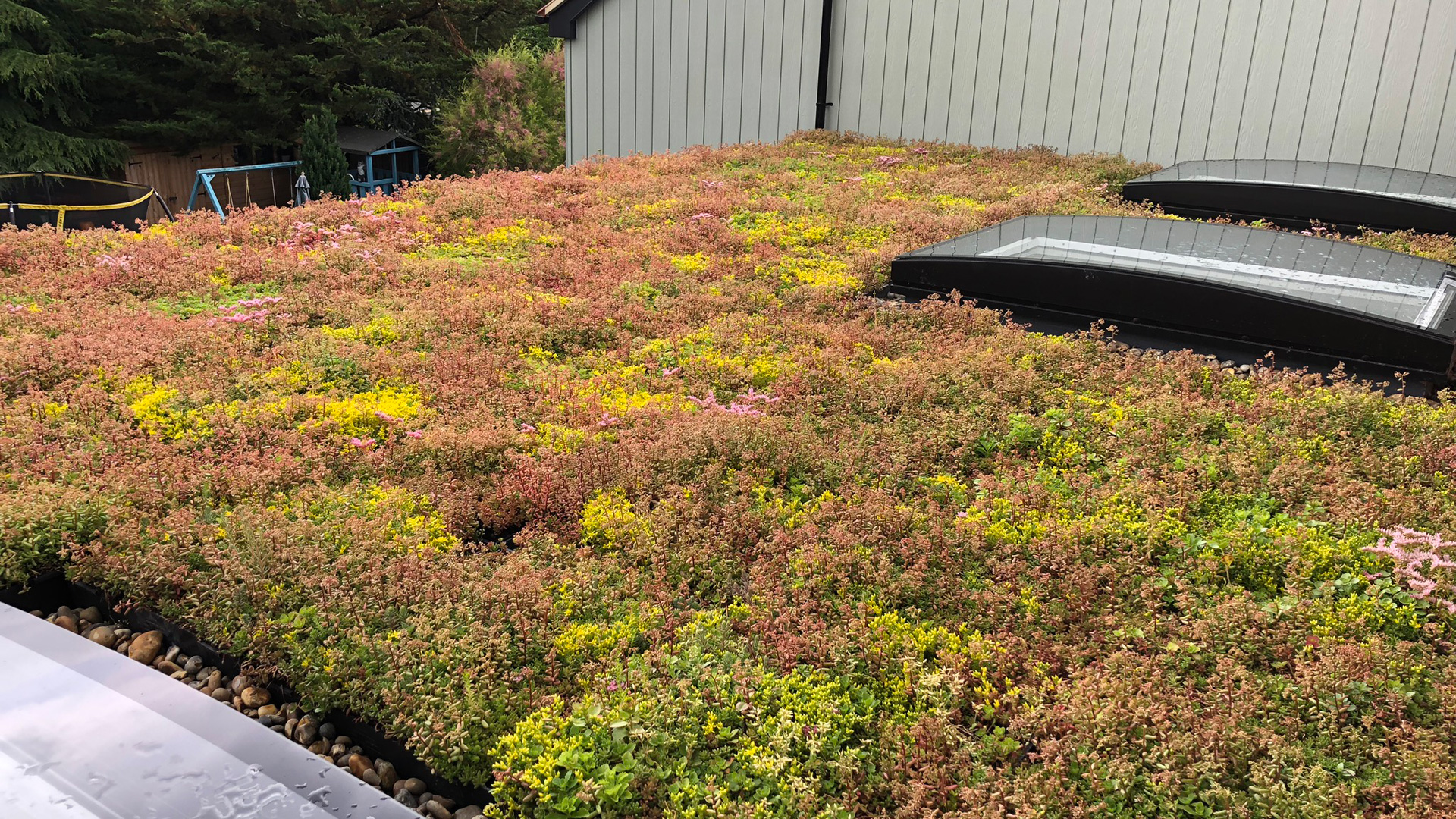
A modular green roof system consists of pre-grown cassettes or trays that contain:
- A base unit
- Growing medium (substrate)
- Established vegetation (typically around 80% coverage)
These units are often interlocking and designed for quick installation.
Modular Blue-Green Roof Systems
A modular blue-green roof provides the same structure but includes additional water management capabilities. These systems:
- Retain and attenuate rainwater
- Reduce runoff from flat or gently sloping roofs
- Support passive rainwater reuse
2. Key Benefits of Modular Green Roofs
Modular systems offer several advantages:
- Single-component installation simplifies the process
- Pre-grown vegetation provides near-instant results
- Ideal for restricted access areas due to manageable unit sizes
- Suitable for temporary greening applications
- Off-site quality control ensures consistency before delivery
3. Design Considerations for Modular Green Roofs
Careful planning is essential to ensure performance and compliance.
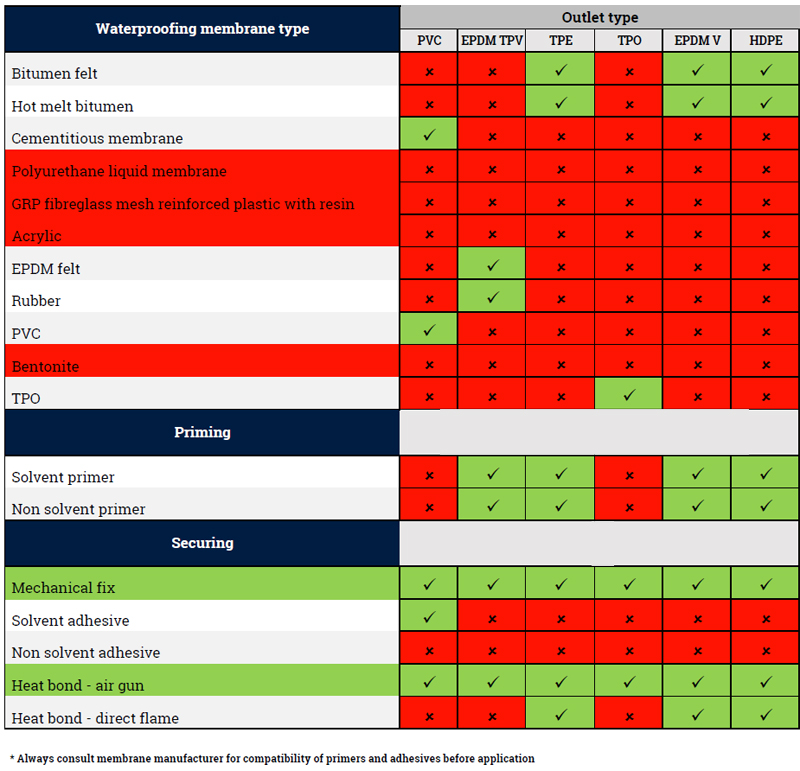
Waterproofing Compatibility
Always confirm with the waterproofing supplier that:
- The system is suitable for a modular green roof
- Existing warranties will not be affected
- Additional root barriers or protection layers are specified if required
Layout Planning
Modular trays are typically square or rectangular, so:
- A layout plan must be created for each roof area
- Irregular borders may occur around edges and penetrations
Suitability of Modular Systems
Not all roofs are suitable for modular systems. They may not be ideal for:
- Curved roof designs
- Projects requiring variable substrate depths
- Biodiverse roofs needing different growing depths
4. Wind Uplift Considerations
Wind uplift resistance is a key performance factor.
It depends on:
- The weight of the system per square metre
- The substrate composition
- The connection between trays
Important Notes
- Requirements vary based on location, building height, and roof type
- Always request wind uplift data from the system supplier
5. Fire Safety Considerations
Fire safety is critical for both modular and built-up green roof systems.
Regulatory Compliance
Guidance is provided through the GRO Fire Performance of Green Roofs Best Practice Guide, aligned with Building Regulations and Approved Document B.
Three compliance routes are recognised:
- Testing and Classification
- DD ENV 1187:2002
- BS EN 13501-5:2016
- Example classification: Broof(t4)
- Deemed to Satisfy
- Substrate with less than 50% organic content
- Minimum depth of 80mm
- Assessment
- By a suitably qualified professional
Important Limitation for Modular Systems
Due to plastic tray walls, modular systems cannot use the “Deemed to Satisfy” route. Instead, compliance must be achieved through:
- Testing and certification
- Professional assessment
Additional Fire Safety Measures
- Fire, wind, and maintenance breaks should be included
- Typically 300–500mm wide at perimeters and penetrations
6. Transporting, Storage and Unpacking
Correct handling is essential to maintain plant health.
Best Practice Guidelines
- Avoid leaving trays on pallets for more than 24 hours
- Unpack and lay out trays as soon as possible
- Prevent overheating by avoiding prolonged stacking
- Water trays if stored for more than 24 hours
- Take extra care during hot weather to prevent dehydration
7. Maintenance Requirements
Maintenance for modular green roofs is similar to traditional systems and should be carried out at least twice per year.
Key Maintenance Tasks
Watering
- Required during extended dry periods (6+ weeks without rain)
Fertilising
- Use sparingly
- Avoid excessive nutrients to prevent weed growth
- Use slow-release fertiliser if necessary
Seasonal Maintenance
- Remove dead plant material and flower heads
- Cut back dead growth
- Remove weeds and invasive plants (including roots)
- Refill bare patches using Sedum or plug plants
Drainage and Inspections
- Keep rainwater outlets clear of debris
- Inspect surrounding areas for blockages
Ongoing Maintenance
- Replace damaged modules if needed
- Top up substrate if tray edges become exposed
- Increase maintenance frequency for better long-term results
For larger systems:
- Use a specialist maintenance contractor
- Carry out inspections 2–4 times per year
8. Irrigation Guidance
Most extensive green roofs do not require permanent irrigation systems because:
- Plants are drought-tolerant
- Systems are designed for low maintenance
When Irrigation May Be Needed
- During prolonged dry periods (6+ weeks without rain)
- Temporary watering may be required
Some systems may include integrated irrigation where necessary.
Glossary of Key Terms
Cassette / Module / Tray
A standalone unit forming part of the green roof system.
Sedum
A hardy, low-growing succulent commonly used in green roofs.
Substrate
The growing medium used to support plant life.
System
The full build-up of layers within a green roof.
Vegetation
The plant layer, typically Sedum in modular systems.
Wildflower
Pre-grown or seeded plants used for biodiversity applications.
Conclusion
Modular green roof systems provide a practical, efficient, and high-quality solution for modern roofing projects. By following best practice guidance around design, fire safety, wind uplift, and maintenance, these systems can deliver:
- Long-term durability
- Regulatory compliance
- Environmental benefits
- Reliable performance
This structured guidance ensures that modular green roofs are installed and maintained to the highest standards, supporting both safety and sustainability across a wide range of applications.