Next Day Delivery order before 2pm
  Order / Enquire Now
 Call 020 8916 2222
Refurbishment projects often present unique challenges, particularly when working with existing structures that were not originally designed to meet modern fire safety standards. The transformation of Meridian House is a prime example of how innovative thinking, advanced materials, and expert design can deliver a safe, compliant, and visually impressive result.
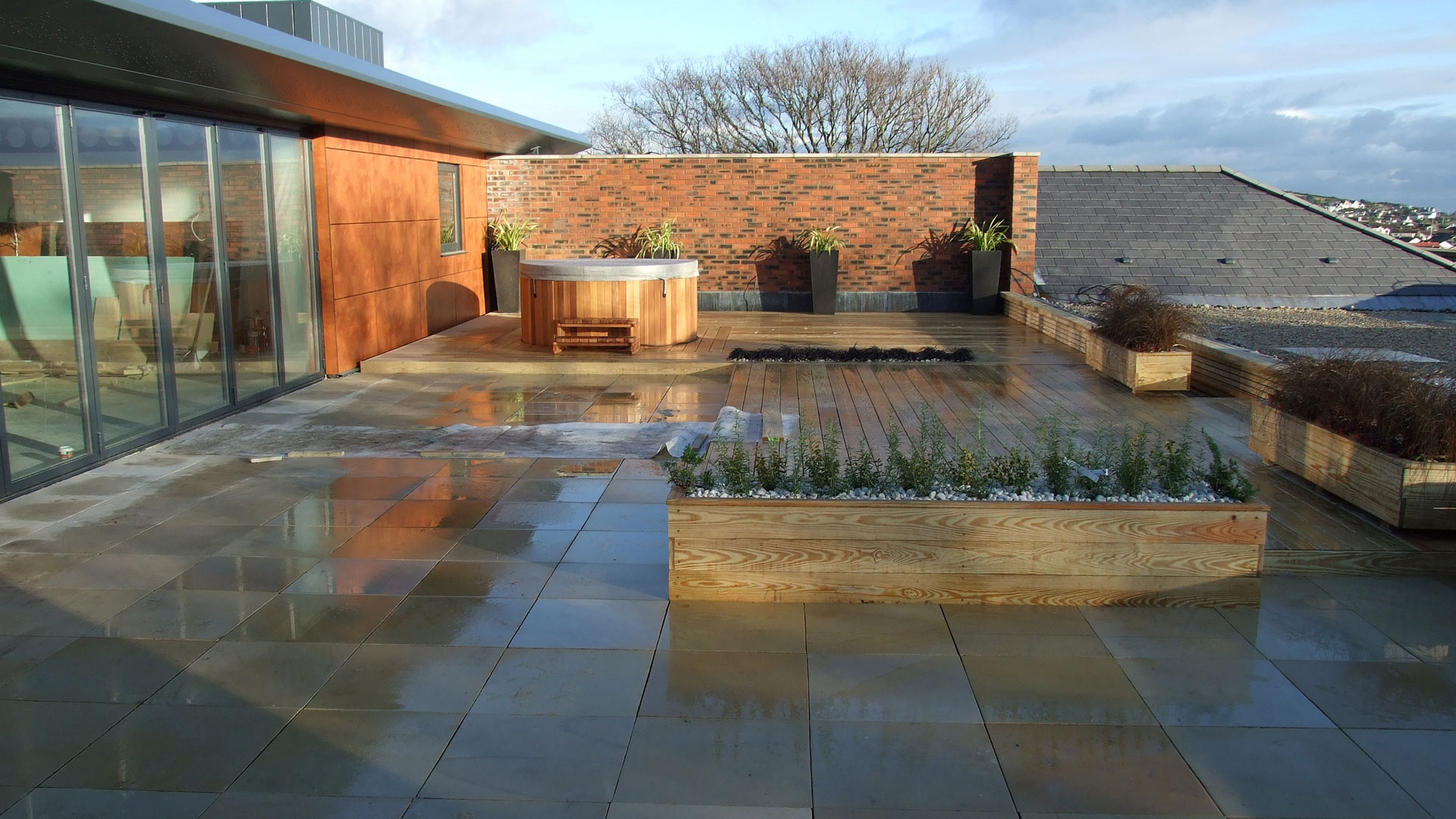
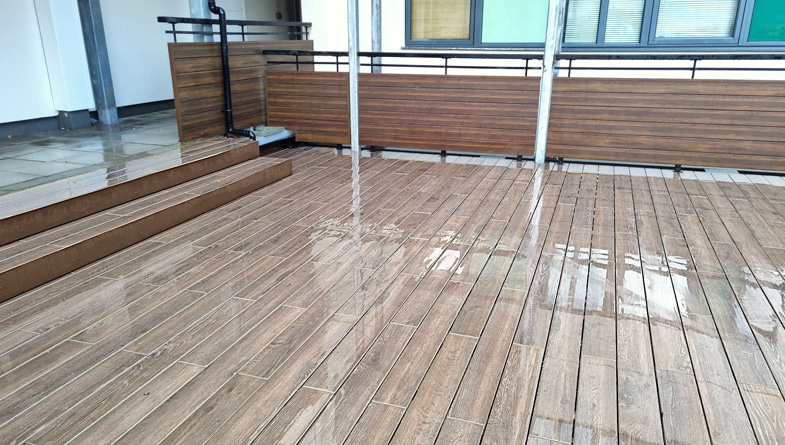
This project required the complete replacement of a timber decking system across both balconies and a large podium area suspended above an underground car park. The objective was clear: create a fully non-combustible solution that meets the latest fire safety regulations while maintaining durability and aesthetic appeal.
For a full overview of the project, you can explore the official case study here:
Meridian House Non-Combustible Decking Refurbishment
Understanding the Challenges of Refurbishment Projects
Unlike new builds, refurbishment projects must work within the constraints of existing structures. At Meridian House, this included:
- Balconies with varying construction requirements
- A large podium deck suspended above a car park
- Limited structural support in certain areas
- Wide spans between steel beams
These factors ruled out conventional decking methods, particularly those relying on standard pedestal systems. Instead, a tailored solution was required to ensure structural integrity and compliance.
Balcony Areas: A Combination of Simplicity and Adaptation
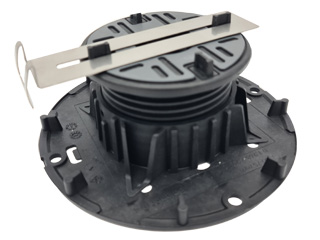
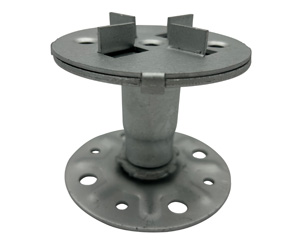
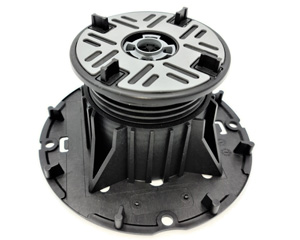
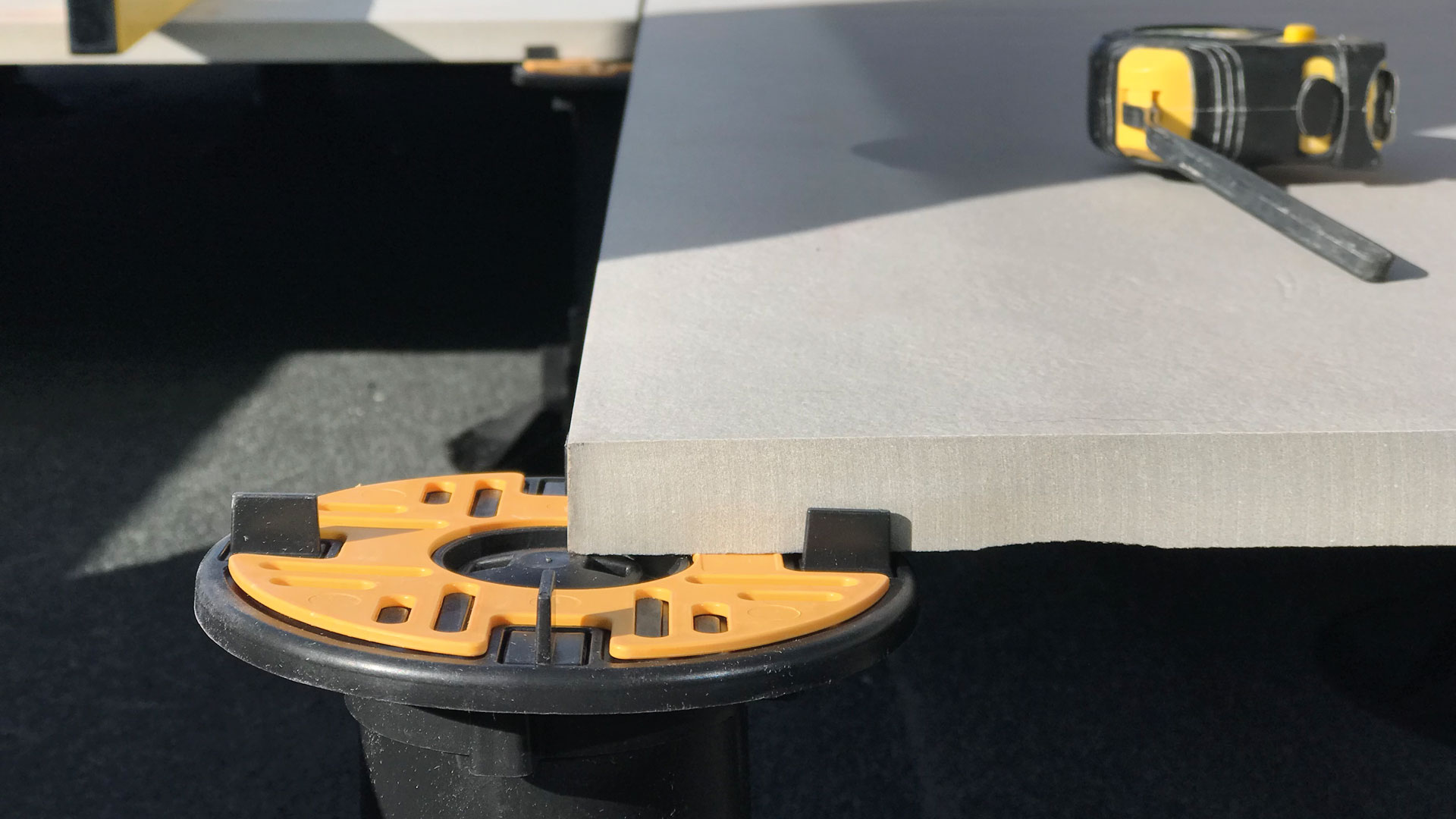
Some balcony areas allowed for more traditional installation methods. In these spaces, installers used adjustable pedestal systems such as MetalPad EX to support the decking framework.
These pedestals were installed over a concrete subfloor, creating a stable base for aluminium joists and high-performance porcelain decking boards. The result was a level, durable surface that meets fire safety standards while offering excellent long-term performance.
In other balcony areas, however, the approach needed to be adapted. Here, aluminium joists were mechanically fixed directly to the building structure and balcony perimeter. This method ensured a secure installation where pedestal systems were not suitable, demonstrating the flexibility required in refurbishment work.
The Podium Deck: A Complex Engineering Challenge
The most technically demanding aspect of the project was the podium deck. Suspended above an underground car park, this area lacked a concrete slab, meaning there was no conventional base for a decking system.
Instead, the only available support came from existing rolled steel joists and beams. Complicating matters further, the spans between these structural elements exceeded the recommended limits for standard aluminium joists.
This posed a critical challenge:
- Standard systems risked excessive deflection
- Structural integrity could not be compromised
- Fire safety compliance remained essential
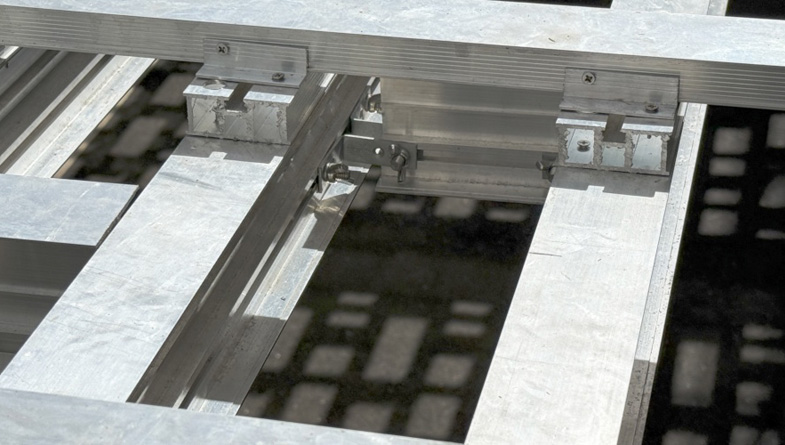
To address this, Wallbarn proposed a solution involving mechanical fixing using specialist components such as the Joist Hanger. These brackets allowed the aluminium substructure to be securely attached to the steel framework, creating a stable base for the decking system.
Innovative Substructure Design for Wide Spans
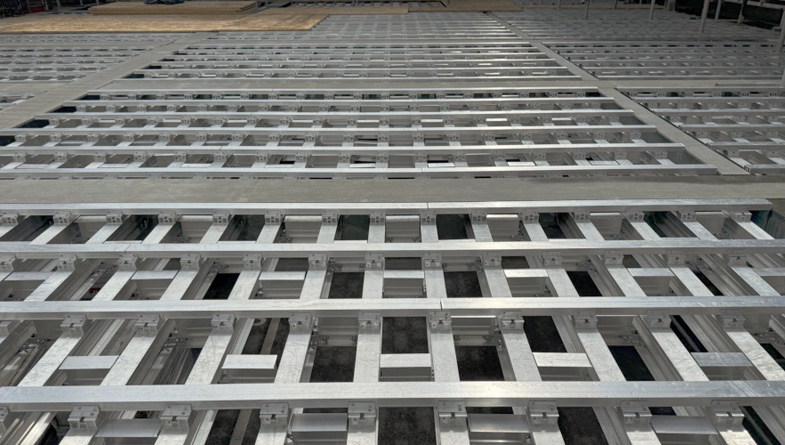
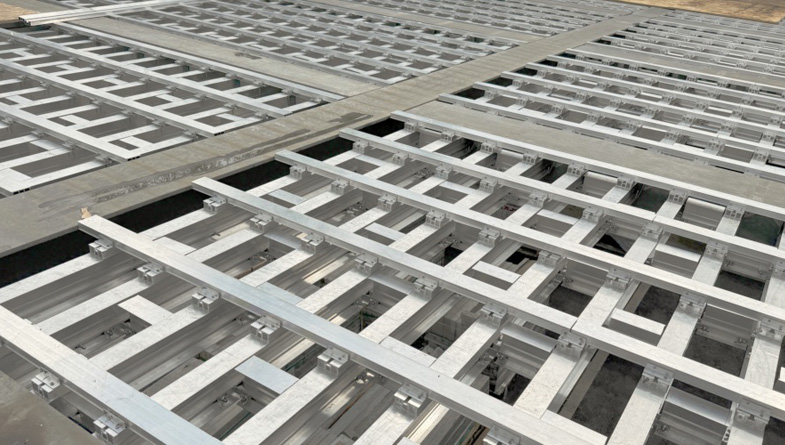
To overcome the issue of wide spans, a more advanced structural solution was required. The project architect designed a multi-layered substructure using Wallbarn’s aluminium systems.
This included:
- A primary layer of I-Plus Beam rails
- Two additional layers of perpendicular Box Rail joists
- A fully interlocked framework for enhanced strength
This three-layer configuration distributed loads more effectively, reducing deflection and increasing overall stability. By creating an integrated framework, the system was able to perform well beyond the limitations of a single-layer structure.
The Role of Independent Testing
Confidence in this innovative approach was reinforced through independent testing. Wallbarn commissioned load tests to evaluate the performance of the substructure under realistic conditions.
The results were highly encouraging:
- Increased allowable spans compared to single rails
- Improved load distribution across the framework
- Compliance with strict deflection limits
This testing ensured that the system not only met but exceeded performance expectations, providing reassurance to both the client and the project team.
Choosing the Right Surface: Porcelain Decking
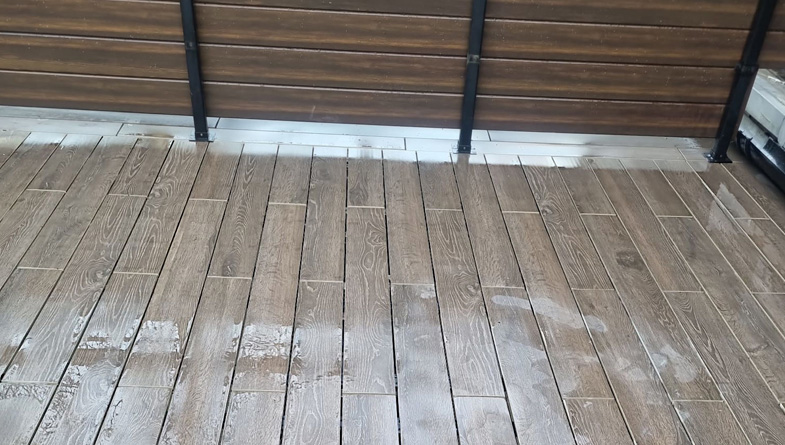
The final surface finish played a crucial role in achieving the project’s objectives. The chosen material was Porcelain Decking, offering a combination of safety, durability, and visual appeal.
Key benefits include:
- Fully non-combustible composition
- Exceptional resistance to wear and staining
- Slip-resistant surface for safety
- Long lifespan exceeding 50 years
This made it the ideal choice for a residential environment where both performance and aesthetics are important.
A Complete, Integrated System
One of the standout aspects of this project was the use of a fully integrated decking system. From substructure components to surface finishes, every element was designed to work together seamlessly.
This included:
- Aluminium rails and joists
- Fixings and brackets
- Hidden clip systems for a clean finish
- Fire-rated decking boards
By supplying a complete solution, Wallbarn ensured consistency, compatibility, and reliability throughout the installation.
Delivering Long-Term Value and Safety
The completed refurbishment at Meridian House demonstrates what can be achieved with the right combination of expertise and innovation.
The new decking system provides:
- Full compliance with modern fire safety regulations
- Enhanced structural performance across challenging spans
- A durable, low-maintenance surface
- A visually appealing outdoor space for residents
Perhaps most importantly, it delivers peace of mind. Residents can now enjoy safe, high-quality outdoor areas, while property managers benefit from a long-lasting, compliant solution.
Conclusion
The Meridian House project highlights the importance of adapting to site-specific challenges in refurbishment work. By combining advanced substructure design, rigorous testing, and high-performance materials, it was possible to transform a complex environment into a safe and functional space.
This case study serves as a valuable example for architects, contractors, and property managers seeking reliable, non-combustible decking solutions in similar scenarios.